






































PORT OF SPAIN, Trinidad, CMC – The Trinidad and Tobago government, on Wednesday, defended its decision to pilot legislation allowing for homeowners to protect their properties even by the use of deadly force, as the opposition warned that the bill would damage the fabric of society.
Before the debate, Prime Minister Kamla Persad-Bissessar, writing on X, said that during the campaign for the last general election, she had given her word to the population that her administration “would act decisively to protect families, safeguard homes and restore peace of mind.
“Today I am proud that debate begins in the House of Representatives on legislation that will legally empower citizens to defend themselves and their loved ones against the frightening scourge of home invasions, an issue that was left unattended for too long,” she wrote.
She said that the legislation is “more than a law and “it is a solemn commitment to your safety, your dignity and your right to feel secure in the one place that must always be safe, your home,” she added.
Attorney General, John Jeremie, in tabling the Home Invasion (Self-Defence and Defence of Property) Bill 2025, commonly known as “stand your ground legislation”, said that the state of crime and criminality here was for the new government” untenable.
“It was left to fester for a decade, this government promised to deal head-on with crime, from the root causes to the manifestation of it, and we are not afraid to deal with gang-related crime, gang leaders, and the perpetrators and bullies who have terrorised this country…
“We have taken decisive action in the interest of all of our people to destroy the relationship between gang leaders and their troops”.
Jeremie acknowledged that solving the problem of crime “is not a quick fix” and requires a “consistent strategic approach that empowers and equips the protective services to interdict and arrest criminals.
“It requires simultaneously that the justice system is fully functional and brings criminals to justice in the shortest possible time”.
He said that the new legislation is based on a long established maxim that a man’s home is his castle and that the “doctrine is that a lawful occupant of a dwelling house has the right to use necessary force, including deadly force against an attack and invader …without retreating from that individual if the occupier reasonably believes that the invader would commit an offence against him or others in the dwelling house.”
He told legislators that, in considering the legislation, questions arose about the sufficiency of the common law doctrine in present circumstances.
“Trinidad and Tobago, the question is whether the doctrine should be reformed and how home invasion should be addressed,” he said, adding that he had sought the assistance of the Law Reform Commission to develop a policy position for our country.
“I am pleased to say that the Commission conceived of recommendations and a bill that this government accepted, well-suited to our criminal justice system is now before us,” Jeremie added.
He said that the bill also provides for a person assisting an occupier “in good faith…may use the same degree of force” and that to prevent an abuse of the measure the legislation provides that a “defence would not be valid if the individual against whom the force is used has a right to be in the dwelling and the force used against the invader is grossly disproportionate, the occupier has been engaged in criminal activity or an individual is a law enforcement officer lawfully executing his duties and the occupier knew or should have known at the time”
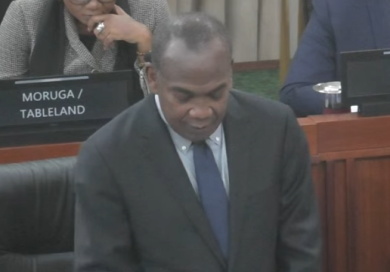
But former junior national security minister, Keith Scotland, said that any innocent life “taken on a mistaken belief that a person is a criminal or has criminal intent” is a travesty of justice.
“In this life, it is not a dress rehearsal, and for that deceased, there is no return, there is no jury, there is no opportunity to present his or her defence, and what about the person who actually does the act.
‘What about that trauma. This is not a situation where a person has an opportunity to apply for bail if he falls afoul of this law, to present his defence, to say it was a mistake,” said Scotland, a criminal defence attorney noting that this situation occurred to a woman of four “who innocently found herself going to a wrong home saying she was about to clean it.
“She was killed. There is no return. She is dead. That is the mischief of this bill,” Scotland said, adding that there is a crime problem, but this bill is not the solution.
“This bill is a dipropionate, lazy, populist policy from an indolent, lazy, and incompetent government that does not want to do the hard work. It is the bill and the piece of legislation of an administration, which I say is hell bent on destroying the very fabric of this society called Trinidad and Tobago, where we say that every creed and race must find an equal place.”
This bill is a floating jurisprudential fig leaf; it is vague, it is obscure, and it offends the principle of legal certainty,” he said.
Scotland said since coming to office in April this year, the Persad-Bissessar-led administration has taken actions “targeting certain sections of this society” and that the legislation is “no different from the attacks on people who are expressing their views on social media when they won this election solely on social media”.
He said that in examining the bill, it is not only about property, but trust, justice, and fairness, and it is about a society at work we say is under attack”.
The senior counsel argues that the bill is “undermining the norms and values of society” and purports to protect homeowners, but it creates far more dangers than it resolves.
“It undermines the constitution, it invites vigilante justice, it threatens vulnerable persons, and endangers all persons of Trinidad and Tobago. The opposition supports firm action against violent criminals. We understand what is being faced, but a law designed to protect citizens must never put innocent persons at risk.
” It must not override constitutional rights that are guaranteed unnecessarily. It must not create more opportunities for bloodshed inside the very homes it is claiming to protect,” Scotland told legislators.











 and then