






























WASHINGTON, CMC – I return to focusing on Haiti because it is too easy for the world to overlook the situation in that beleaguered country. In part, it is precisely because insufficient attention has been paid to Haiti in a holistic way that its circumstances worsen and its people continue to suffer.
This assessment draws on recent reporting by the Réseau National de Défense des Droits Humains (RNDDH)—”Laboderie Massacre – Internal Situation Report” and “Calls to Return Issued to Citizens by Armed Gangs” as well as an analysis by the Global Initiative Against Transnational Organized Crime (GI-TOC), “Addressing Haiti’s Escalating Crisis: From Criminal Governance to Community Fragmentation” (September 2025).
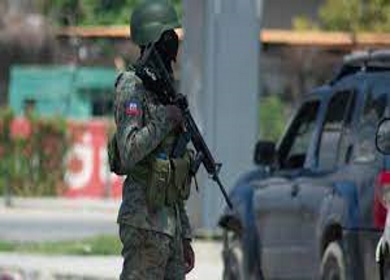
On security, the strategy in Haiti – if one exists – is fragmented and ineffective. Several separate activities, including a Prime Minister’s task force, scattered drone projects by private contractors, and a Kenyan-led Multinational Security Support (MSS) mission, do not add up to a cohesive strategy.
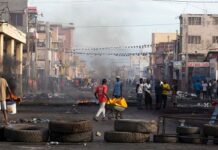
The bottom line is that there is no absolute security. The Haitian National Police, even with assistance from the MSS mission, is understaffed and overextended, and the results are inconsistent. Meanwhile, gangs control roads, neighbourhoods, and revenue streams. Plainly, this is criminal-style governance (a pattern documented by GI-TOC and RNDDH).
Politics is equally stuck. The Transitional Presidential Council (TPC) has stalled; elections in November 2025 are unlikely to occur; and there remains no credible plan for the period after 7 February 2026, when the TPC’s mandate expires. Power plays among politicians and elites are consuming time the country does not have. Every week of drift strengthens armed groups and weakens the state.
Yet a workable path is available, but it must be executed as a single package, not as isolated efforts. Haitian authorities must secure critical transport infrastructure, including airports, ports, fuel depots, bridges, and national road corridors.
Without safe movement of goods, people, and services, every other effort fails. To achieve this, there must be an organised and funded apparatus that includes mobile response teams, clear rules of engagement, and humanitarian corridors that aid agencies can actually use.
At the same time, the Haitian authorities and their international partners must cut off the arms (except to the Haitian Police) and illicit finance that keep gang structures alive. Interdiction at entry points, surveillance of organiser-financier networks, and real-time financial intelligence must be routine.
U.S. sanctions on gang leaders and enablers should be matched with seizures, arrests, and prosecutions so the cost of doing business rises for organisers and financiers, not just street enforcers. Justice institutions must prioritise the prosecution of those persons behind the networks that procure, launder, and shield criminal enterprise. If the logistics and money persons remain untouched, gangs regenerate. We know these things to be true, but too little is done.
Finally, the UN, the Organization of American States (OAS), and the Caribbean Community (CARICOM) should act in coordination with a single plan that incorporates security, humanitarian relief, governance transition, and economic measures.
That plan must include a clear transition architecture for the period after February 2026 that avoids a governance vacuum (already within Haiti, influential groups are crying out for action on this). The OAS Secretary General’s Haitian-Led Roadmap provides the framework; what’s missing is one budgeted operational plan, a unified Security Council mandate, and a funded UN instrument to run it.
While a UN trust fund for the MSS mission already exists, it is voluntary and insufficiently capitalized; therefore, the United Nations should operationalize a Haiti Fund that is transparent, audited, and tied to results across the entire plan. This approach will incur costs and require sustained attention. However, we should remind ourselves that UN-coordinated appeals for Haiti drew roughly two-thirds of a billion dollars from 2023 to 2025; it is far less than what Sudan’s war, the Gaza crisis, or Ukraine’s war receive in a single year.
The Fund should be financed in particular by the United States and France, joined by other states that have benefited from their involvement with Haiti, its labour and its markets. This is not charity; it is responsibility.
Disbursements for projects in Haiti should be linked to concrete milestones: keeping open essential corridors for the movement of people, goods, and humanitarian aid; stopping extortion on national routes; seizing arms and cash connected to criminal networks; reopening schools and health-care centres in secured zones; and completing agreed steps toward the post-February 2026 transition on schedule.
The UN Security Council’s veto-holding members must back a single, coherent strategy—no mixed signals, no competing mandates, and no symbolic resolutions that excuse meaningful action. Mandates, funding, and operational support must align behind the unified plan. If the Council will not support a strategy that can actually be executed, it should say so plainly and accept the consequences.
Also, external support without internal discipline will fail. Haitian political and economic actors need to stop manoeuvring for advantage while the state erodes. The country needs a focused government with a limited public programme: restore security along lifelines, stabilise essential services, support justice operations against organised-financier networks, and set a realistic timeline for elections when minimum security conditions exist. Anything else invites more violence and deeper collapse.
The Haitian people have been promised a lot, but their situation has worsened. The next phase must be different: one integrated security design, one transition path, one financing vehicle, and one set of performance measures.
Haitian authorities must own the plan by showing that they have the capacity to act in their nation’s interest; international partners must support it; and the Security Council must stop treating Haiti as an inconvenient intrusion.
If action is not taken now, the Haitian state will contract further, and armed groups will expand, with spillovers across the Caribbean and the Americas in migration, security, and human suffering.
*The author is the Ambassador of Antigua and Barbuda to the United States and the OAS, and Dean of the OAS Ambassadors accredited to the OAS.






 and then