






























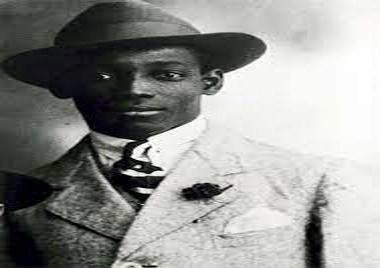
PARAMARIBO, Suriname, CMC – The Dutch government Monday offered an apology to the children and relatives of the Surinamese anti-colonial resistance fighter, Anton de Kom, who in 1932 was banned from entering the Dutch-speaking Caribbean Community (CARICOM) country because of his left-wing ideas and activities
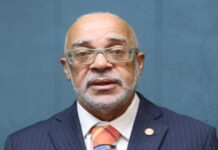
Dutch Foreign Affairs Minister Wopke Hoekstra apologized to the family for the suffering De Kom and his family experienced at the hands of the authorities.
As a result, in consultation with the family and the Anton de Kom Foundation, the Dutch government has decided to establish a chair at the VU University Amsterdam. The chair, financed by the Ministry of Foreign Affairs, will start in the academic year 2023-2024.
“Anton de Kom was a brave man who fought for justice, equality, and human dignity,” said Hoekstra.
“He did that as an anti-colonial thinker and writer, activist, and resistance hero. Unfortunately, these were not the words the then authorities used to describe him”, he added.
The Dutch government now acknowledges that De Kom was “impeded” in his activities, arrested in Suriname, and then put on a ship to the Netherlands.
“And despite all that, he gave his life for the Netherlands by joining the resistance during World War II,” said Hoekstra.
“His important contribution to Dutch and Surinamese history, including as the author of the impressive and important book ‘We Slaves of Suriname,’ deserves honor and recognition. This chair will help Anton de Kom and his body of ideas get their rightful place in history education and the academic world,” Hoekstra said.
By establishing an Anton de Kom chair, the Dutch government supports a motion by Surinamese legislator Van Ojik on January 28, 2021, highlighting De Kom’s contribution to Suriname’s development.
De Kom, an anti-colonial activist, used his parents’ house in Paramaribo to offer his services to working-class members, informing marginalized groups and laborers of their rights. Large groups gathered around the house because De Kom was helping Javanese and Indians with their re-emigration.
But on February 1, 1932, he was arrested en route to the office of Governor Bram Rutgers with a large group of followers. However, in the following days, large groups gathered before the Attorney General’s office to demand De Kom’s release.
On February 7, a large crowd gathered on the Oranjeplein, now called the Independent Square, amid rumors that De Kom would be released. But when the group refused to follow instructions from the police to leave the square, they were fired upon, with two people being killed and several others injured.
De Kom was subsequently exiled to the Netherlands because he was considered a public order and peace threat.
In the Netherlands, he wrote ‘Wij slaven van Suriname’ (‘We Slaves of Surinam’), an anti-colonial book. During World War II, he joined the resistance, was arrested, and sent to concentration camps, where he died.







 and then