











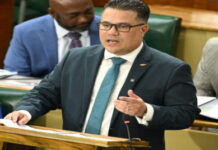






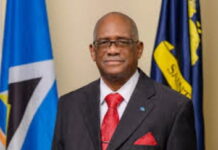






















GEORGETOWN, Guyana, CMC – The Court of Appeal says it will deliver its ruling on March 17, in the case in which Opposition Leader, Azruddin Mohamed, and his businessman father, Nazar Mohamed, are challenging the Authority to Proceed (ATP) issued by the Minister of Home Affairs, Oneidge Walrond, regarding their extradition to the United States.
The Mohameds were indicted in the United States in October 2025 on charges including wire/mail fraud, money laundering, and bribery linked to a US$50 million gold smuggling and tax evasion scheme. They were arrested in Guyana in October 2025 following a US extradition request, which remains ongoing.
The latest appeal follows the High Court’s February 4, 2026, decision dismissing their application to quash the ATP on grounds of alleged bias.
In their Notice of Appeal, the Mohameds argue that the High Court erred in finding that Walrond was acting in a purely political or administrative capacity when issuing the ATP, contending instead that the decision engaged quasi-judicial functions and required strict adherence to principles of natural justice, including the rule against bias.
They further contend that the Minister’s role in issuing the ATP and, potentially, making the final extradition decision under the Fugitive Offenders Act makes impartiality indispensable.
“It is submitted that the decision of the learned judge in the court below was premised on several errors of law and of fact which operated altogether to miscarry justice,” the defence lawyers argued.
Trinidad-based Senior Counsel, Fyard Hosein, leading the defence, told the Court of Appeal, led by acting Chancellor Roxane George and including Justices of Appeal Rishi Persaud and Nareshwar Harnanan, that because the Minister is politically aligned with the governing administration, she should have delegated the decision-making authority to another official.
However, Chancellor George pressed him on how such a delegation would work, noting that the defence’s pleadings suggested that even the President could be viewed as tainted, raising the question of whether any decision-maker could be accused of bias.
“Wouldn’t presumed bias infect that person?” the Chancellor asked during the exchange.
Hosein responded that the issue was not simply the delegation itself but who performed it, insisting that the process must avoid perceived political conflict.
He also asked the Court of Appeal to grant a stay of the magistrate’s court proceedings to allow the matter to be taken to the Trinidad-based Caribbean Court of Justice, the country’s highest and final court, should it rule against the Mohameds.
Hosein argued that the extradition proceedings should not be “hustled to facilitate prosecution”.
But another Trinidad-based Senior Counsel, Douglas Mendes, who is leading the state’s case, argued that the extradition process cannot be halted simply because one of the men sought by the United States on fraud-related charges has since entered politics and is an opposition legislator.
“We have come too far to say let’s stop extradition proceedings,” Mendes said, rejecting the defence’s position and arguing that the law does not provide for the delegation of a minister’s authority on a case-by-case basis.
According to Mendes, any delegation must be general in nature and made beforehand, rather than in response to a particular matter.
He also argued that delegating the power to another minister would not solve the defence’s concerns.
“If another minister were to act, they too would be accused of presumed bias,” he told the court, adding that delegation would more appropriately be made to a public officer if it were contemplated at all.
Mendes said the ATP is purely procedural and does not determine whether the individuals will ultimately be extradited, adding that the defence’s argument about political bias applies only to Azruddin Mohamed, and not to his father.
“The extradition request will impact politics, but the case for Nazar has not been made out at all,” Mendes argued, adding that the extradition request predated the son’s political involvement.
Mendes told the court that the process cannot be invalidated because he later entered electoral politics.
“Process of extradition cannot grind to a halt because one of the men being sought is an opposition leader,” Mendes said, adding that even if the court were to accept the defence’s concerns about bias, no alternative decision-maker has been proposed.
“They want to strike down the Authority to Proceed but cannot say who should now be delegated,” Mendes said, adding, “This is merely academic. To what end? What is the prejudice caused?”
Attorney General Anil Nandlall, who is a respondent in the matter, said he fully endorsed Mendes’ submissions, arguing that the initial High Court challenge should never have been filed.
“The fixed date application in the High Court should have never been filed, and consequently this appeal should not have been filed,” he said, describing both cases as “equally hopeless”.
Nandlall said Azruddin Mohamed was well aware an extradition request was pending when he contested the last elections and contended that he did so to make the very claims he is now making.
While the appeal is pending, the substantial committal hearing in the extradition proceedings continues before Magistrate Judy Latchman, and Mendes suggested that once the committal stage concludes, the defence could pursue other legal avenues, such as habeas corpus.









 and then
 )