


















SCARBOROUGH, Tobago, CMC – Less than three months after the United States military invaded Venezuela and detained its leader, Nicolas Maduro, on drug-related charges, the controversial radar, which had been erected here, has been taken down.
The military-grade ground/air task-oriented radar at the ANR Robinson International Airport in Crown Point has been dismantled, and, according to media reports, a US military aircraft is expected to arrive here to transport the $3 million a day in equipment.
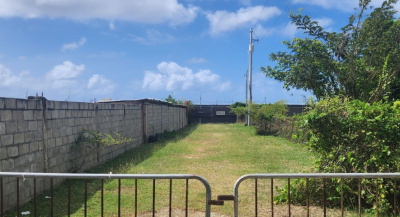
The Trinidad Guardian newspaper, on Monday, published a photo of an empty lot where the towering radar could previously be seen rotating 360 degrees.
Last Wednesday, Chief Secretary Farley Augustine said the US troops would be leaving Tobago “in a couple of days.”
The radar arrived in Tobago in November last year with Prime Minister Kamla Persad-Bissessar, saying then that it was to assist in dealing with the illegal drugs trade, particularly out of Venezuela.
On January 3, Maduro was detained by the US military and is now in a New York jail awaiting trial on drug charges.
Last month, Defence Minister Wayne Sturge defended the Government’s continued use of the radar, telling reporters that the equipment would remain in place indefinitely as the local authorities intensify efforts to combat drug trafficking and gun smuggling.
“We would have the use of the radar for the foreseeable future. I can’t give a definitive timeline. And the reason we need it: we already have a radar centre, but our radar systems are somewhat limited.
The radar system provided by the US uses drone technology, satellite communications, and so on. So that it offers a lot more than what we have, and that is needed at this point to achieve certain objectives, because, as you would appreciate, the fleet, the Coast Guard’s fleet, is not what it should be. So, we need the assistance, in terms of detection, which would help us with the limited fleet we have; it will help us to respond promptly and intercept,” he said then.
Earlier this month, Sturge said he had requested increased military support from the United States to combat drug cartels operating in the Caribbean. He said he made the appeal directly to US Secretary of Defense Pete Hegseth during the Americas Counter Cartel Conference in Miami.
“We require assets in the interim that would enhance our maritime domain awareness as well as enable us to carry out targeted reinforcement that would serve both our interests and would deliver immediate hemispheric benefits. Our Government is dedicated and ready to shoulder all responsibility, and once proportionally equipped to the expectations faced upon us, we will deliver results,” Sturge told the conference.
“If we are to deliver effectively as the security anchor in the southern Caribbean, we require assets that would equip us with the capability to disrupt the cartels in the transshipment corridors and to protect our shared economic interests in the energy sector.”




 and then