
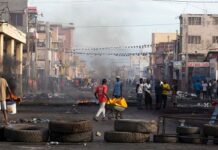












The midday sun hung heavy over Port of Spain, pressing down on Independence Square and stretching long shadows across Wrightson Road. The city moved in its usual rhythm—vendors calling out prices, taxis honking in short, impatient bursts, the distant hum of the sea brushing against the waterfront.
But beneath the noise and heat, the land itself remembered.
Long before the glass towers and government buildings, before the buses and the crowds, this ground had been something else entirely. The elders used to say that if you stood very still at the edge of Independence Square, you could feel it—the quiet pulse of history beneath your feet.
One afternoon, a young journalist named Kareem found himself doing just that. He had come to write a simple piece about urban development, but something about the place made him pause. The air felt thick, not just with heat, but with stories waiting to be told.
He crossed from Independence Square toward Wrightson Road, where the sea breeze cut through the city’s warmth. There, the land opened slightly, as if exhaling. Ships bobbed in the harbor, just as they had centuries before—though now they carried containers instead of chained souls.
Kareem closed his eyes.
And for a moment, the present slipped.
He could almost hear it—the creak of wooden ships, the murmur of languages layered over each other: African tongues, French patois, Spanish whispers, English commands. He saw, in his mind’s eye, people stepping onto this very land—some hopeful, some broken, all shaping what Trinidad would become.
Independence Square, once a place of colonial power, had transformed over time. It became a center of movement—political rallies, protests, and celebrations. The land had watched a nation find its voice, had felt the vibration of drums and speeches, had carried the footsteps of those who demanded change.
Wrightson Road, facing the sea, held another kind of memory. It was a threshold—a place where people arrived and departed. It had seen immigrants come with dreams, workers leave with promises, and families wave goodbye with tears caught in the salt air.
Kareem opened his eyes.
The city rushed back into focus—cars, people, the chatter of everyday life. But now, it all felt different. The pavement beneath him was no longer just concrete. It was layered with centuries of footsteps, struggles, and triumphs.
An older man sitting nearby seemed to notice Kareem’s stillness.
“You feeling it, eh?” the man said with a knowing smile.
Kareem nodded. “It’s like the place… remembers.”
The older man chuckled softly. “Of course it does. This land is not just land. It is a story. Every corner of Port of Spain has a memory—but here? Here is where plenty of it passes through.”
Kareem looked back toward Independence Square, then out to the sea along Wrightson Road.
He realized then that his article wouldn’t just be about buildings or development. It would be about the land itself—the silent witness to everything Trinidad had been, and everything it was becoming.
Because in that space between the square and the road, between the city and the sea, the past and present stood side by side.
And if you listened closely enough, you could hear them speaking.
Kareem stayed where he was, but now the feeling grew heavier.
It wasn’t just memory—it was weight.
He stepped slowly along Independence Square, and this time, when he closed his eyes, the past didn’t come gently.
It came hard.
The polished pavement disappeared. In its place was packed earth, hot and uneven. The air smelled of salt, sweat, and something harsher—fear.
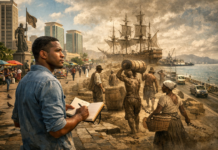
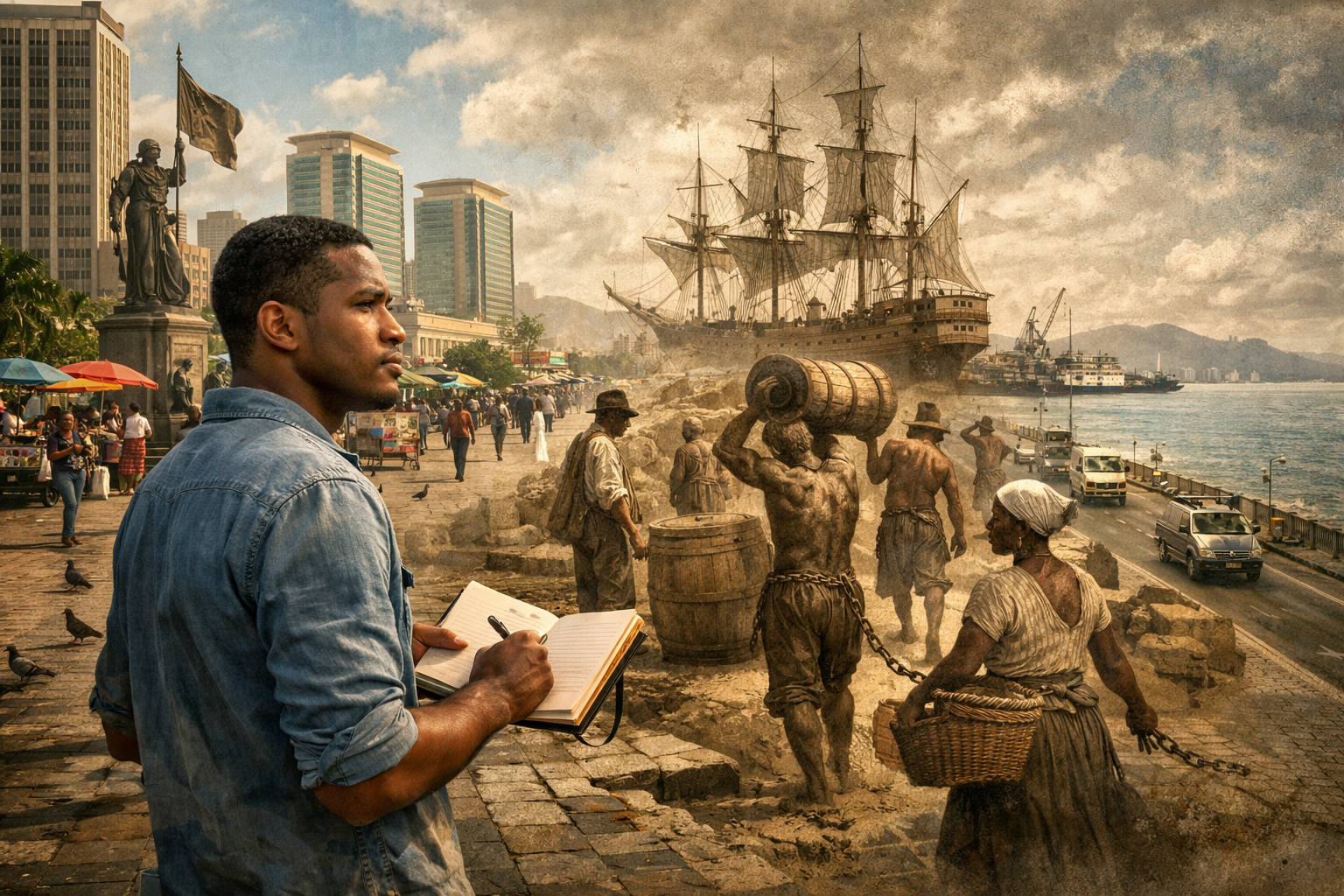
Men and women moved under the sun, their bodies bent with labor. Chains clinked softly with each step. Overseers watched from the shade, their voices sharp, cutting through the air.
This land—this very stretch between Independence Square and Wrightson Road—had once been part of the port, a place of arrival. But not all arrivals were free.
Ships had come into the harbor carrying enslaved Africans. Some were forced onto this land, disoriented, grieving, stripped of everything they knew. From here, many were sold, sent to plantations across Trinidad. Others were kept near the port, made to build, carry, load, and shape the growing colonial town.
Kareem saw them in flashes—
Hands lifting heavy stones.
Bodies hauling goods from ships to shore.
Eyes staring out at the same sea, but with no choice but to cross it.
The land remembered all of it.
Wrightson Road, now busy with traffic, had once been a place where goods—and people—moved constantly. Sugar, cocoa, rum… and human lives treated as cargo. The shoreline had witnessed both commerce and cruelty.
And where Independence Square now stood—a place of speeches and freedom—there had once been control—orders given. Punishments carried out. Lives dictated.
Kareem opened his eyes sharply, his chest tight.
The older man was still there, watching him.
“You see more this time,” the man said quietly.
Kareem nodded, his voice low. “They worked here… didn’t they? Enslaved people.”
The older man leaned back, looking toward the harbor. “Yes. Plenty of people don’t like to talk it plain, but it’s the truth. This city is built on its labor. They’re suffering too.”
A breeze came in from the Gulf, carrying the scent of the sea.
“But hear this,” the man continued. “The same land that sees chains… also sees freedom. After emancipation, after struggle, after years and years—this place has changed. That is why Independence Square is named as it is. It’s not just a name. It’s a reminder.”
Kareem looked again at the square.
People walked freely now—laughing, arguing, living. Vendors sold food. Music played somewhere in the distance. Life moved forward.
But beneath it all, the past remained—not to trap the present, but to give it meaning.
He pulled out his notebook, finally ready to write.
Not just about buildings.
Not just about roads.
But about the truth of the land—
The pain it carried,
The strength it witnessed,
And the freedom that, at last, took root there.
Because to understand Independence Square and Wrightson Road…
You had to understand the people who were forced to build it.
And the ones who lived to see it change.









 and then