




































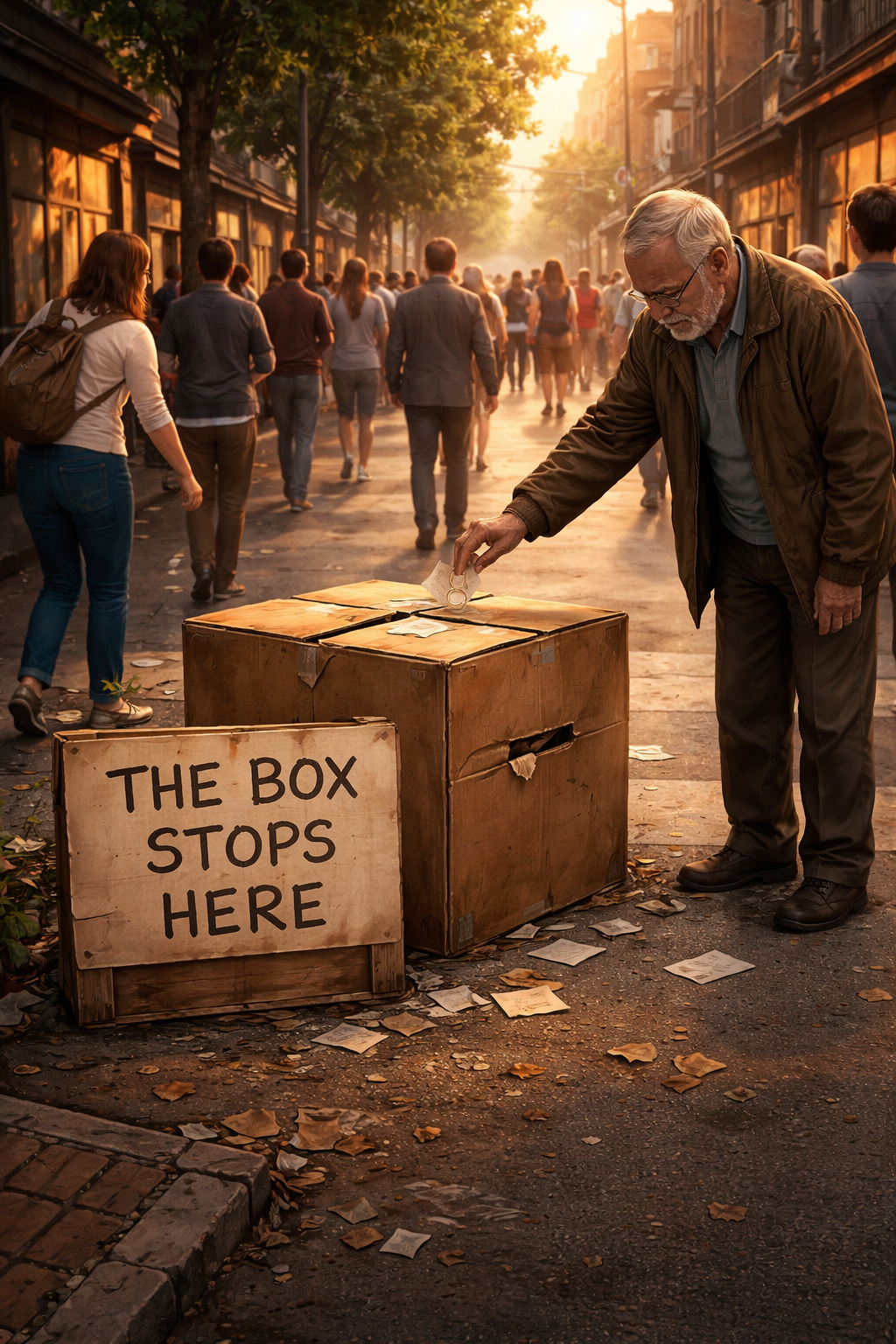
The box sat in the middle of the road, as if it had always belonged there. No label. No tape. Just a plain cardboard square, slightly dented, as if it had already lived a longer life than it should have.
People walked around it.
Some slowed down, curious, circling as if it might bite. Others stepped over it with practiced indifference, the way city people learn to ignore anything that doesn’t shout for attention. A delivery driver nudged it with his boot, shrugged, and moved on. A child tugged her mother’s sleeve and asked what was inside. The mother said, “Nothing that concerns us.”
But the box stayed.
By noon, it had gathered a quiet gravity. Wind pushed scraps of paper against it. A pigeon landed on top, pecked once, then flew away. The box did not move. It waited.
Finally, an older man stopped. He had the posture of someone who had learned patience the hard way. He knelt, pressed a hand against the cardboard, and smiled.
“So,” he said softly, “this is where it ends.”
He didn’t open the box. He didn’t need to.
Inside were all the things people had tried to carry too far—unspoken apologies, borrowed dreams, anger meant for someone else, promises stretched thin by time. The box was not for taking. It was for leaving.
The older man reached into his coat and pulled out a folded note. He hesitated, then slid it through a small tear in the side. When he stood, his shoulders seemed lighter, as if something invisible had finally been set down.
One by one, others noticed. A woman placed her wedding ring on top and walked away without looking back. A teenager whispered into the cardboard and laughed, relieved. By evening, the box was worn, softened by hands and hope.








 and then