


































By Michael Derek Roberts – Editor
(BROOKLYN, New York): It was a dramatic moment Sunday night as the U.S. Senate voted 60–40 to advance a stopgap funding bill to reopen the government through January 30, 2026. The legislation passed thanks to eight Senate Democrats joining their Republican colleagues. This public capitulation to a party and president that BLAMED THEM for the shutdown is a political lesson in craven cowardice and putrid accommodation. Democrats sold out the American people, all but gave Donald Trump the tools to finally, finally kill the Affordable Care Act, aka Obamacare, and most certainly guaranteed the party’s defeat in the 2026 midterm elections.
The deal does contain some provisions that will restore jobs to federal workers laid off during this shutdown, ensure furloughed federal employees get paid, and prevent any further mass layoffs of government workers for the next three months. And that’s a good thing. But EXACTLY what did Democrats get? 20 million Americans whom Senator Jeanne Shaheen said she was fighting for just 13 days ago are plumb out of luck. There will be no extension of the Affordable Care Act (ACA) tax credits. All that the Republican Senate Majority Leader John Thune promised these spineless Democrats is a vote, a procedure, in December on if to extend ACA subsidies that are due to expire at the end of this year. If you think that Donald Trump is going to suddenly embrace a law that is associated with Barack Obama that he’s sought to DIRECTLY kill for four straight years—I have the Brooklyn Bridge to sell you!
People are asking: what is wrong with the Democrats? Is there a weaker, feckless, spineless opposition party anywhere in America? A more shoot-yourself-in-the-foot, self-defeating, self-destructive political force anywhere in the political world? Why can they always be counted on to repeatedly snatch defeat from the jaws of victory? My God! After the drubbing of Kamala Harris in the 2024 presidential election and the public anger against the party, it had a great week with wins in New Jersey, Virginia, New York City, Georgia, and Pennsylvania. People were saying that “Democrats are Back.” The party was not blamed for the shutdown, and people wanted them to fight a president whose approval ratings are in the toilet, yet they still went AGAINST the will of the people and gave Donald Trump a huge political win. Eight Democrats voted to end the shutdown.
· Sen. John Fetterman (D-Pa.)—Not unexpected; he should change his party membership to Republican
· Sen. Angus King (I-Maine)
· Sen. Catherine Cortez Masto (D-Nev.)
· Sen. Jacky Rosen (D-Nev.)
· Sen. Dick Durbin (D-Ill.)
· Sen. Jeanne Shaheen (D-N.H.)
· Sen. Maggie Hassan (D-N.H.)
· Sen. Tim Kaine (D-Va.)
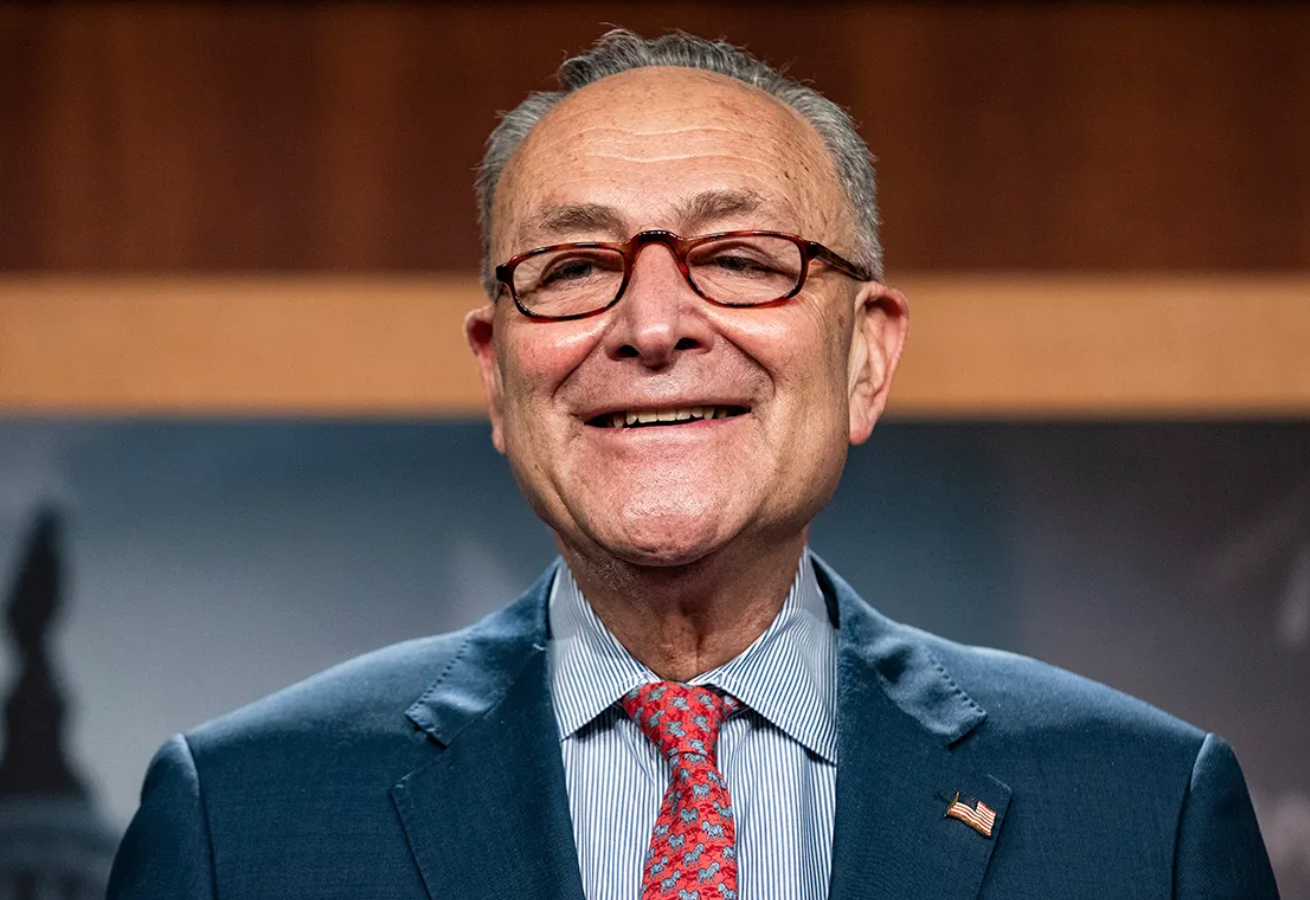
Interestingly, none of these Democrats face an election or a primary challenge in 2026. And two of them have announced their retirement from the Senate. This makes their actions truly inexcusable. As for Senate Minority Leader Chuck Schumer, he claimed he was a ‘No’ on the deal, but, in my opinion, he had to sign off on the Gang of Eight’s negotiations behind the scenes. It’s either that or eight members of his caucus went rogue, and as leader, he lost control. He should resign and take responsibility for this shameless capitulation, his second this year.
Schumer’s Political Cowardice
Chuck Schumer’s frequent concessions and politically cautious approach often come across as spineless because of several intersecting pressures and strategic calculations. First, Schumer must balance a fractious Senate caucus that includes both moderate centrists and progressive left-wing factions, each with diverging priorities and tolerance for compromise. His approach to governance places a premium on maintaining party unity, avoiding outright conflict that risks further fracturing the caucus or imperiling the slim Democratic majority.
Second, Schumer operates within a Senate where the filibuster rule means bipartisan cooperation—or at least tacit Republican consent—is essential to pass legislation. Given entrenched Republican opposition to many Democratic priorities, Schumer faces structural constraints that make achieving sweeping policy goals difficult and incentivize incremental, negotiated deals, even if they fall short of progressive aspirations.
Third, Schumer’s legislative strategy often prioritizes reopening government and avoiding shutdown crises that could harm electoral prospects, pushing him toward quick compromises. For example, his recent advocacy for reopening the government in exchange for a one-year extension of Affordable Care Act subsidies and vague “bipartisan committees” rather than guaranteed reforms reveals a willingness to accept imperfect deals to keep government functioning. He’s done that once again, and his Gang of Eight’s voting with Republicans now places the Affordable Care Act in the gravest danger since it became law.
Critics argue this approach betrays working-class Americans by failing to aggressively defend core issues like health care affordability and by ceding too much to Republicans without securing tangible concessions. The latest genuflecting to Republican bullying is a cautionary tale of Malcolm X’s metaphor of a wolf and a fox to distinguish between two types of white political opposition: the overt “wolf” in the South and the deceitful “fox” in the North. He argued that both are canines (from the same dog family) and that while their methods of oppression differ, they are both united in their opposition to Black progress.
In summary, while Schumer’s perceived “spinelessness” stems from his compromises and lack of a firm stand on key progressive principles, these are largely fueled by the complex realities of Senate politics, fragile majorities, and the challenge of balancing party unity with pragmatic governance.
CHALLENGES TO SCHUMER
Several Senate Democrats are widely seen as potential challengers to Chuck Schumer’s leadership in the near future, fueled by growing dissatisfaction within the party over his repeated concessions to Republicans and failure to secure significant legislative wins.
Key contenders include:
- Senator Brian Schatz (Hawaii): Currently the Senate’s Chief Deputy Whip, Schatz has been actively positioning himself as a future leader. His outreach to members and leadership roles make him a prominent figure in any succession discussion. Schatz is known for his policy expertise and ability to navigate party dynamics.
- Senator Amy Klobuchar (Minnesota): The №3 Senate Democrat, Klobuchar enjoys respect across the caucus for her pragmatic approach. She represents the moderate wing and recently advocated for more assertive Democratic policies.
- Senator Catherine Cortez Masto (Nevada): Also, a noted leader, she has voted alongside Schumer on key issues but is positioning herself for greater leadership responsibility.
- Senator Chris Murphy (Connecticut): Seen as a rising voice in progressive circles and a potential mover for leadership challenges, advocating firmer stances against Republican policies.
- Representative Alexandria Ocasio-Cortez and Other Progressives: Though not in the Senate yet, voices like AOC symbolize the grassroots and left-wing frustration with Schumer’s concessions.
The party faces a leadership crossroads as Schumer contends with balancing party unity, delivering legislative victories, and navigating aggressive primary challenges from progressives demanding a tougher stance. Leadership battles are expected as Democrats prepare for the 2026 midterms and the 2028 re-election cycle.






 and then