










































BRIDGETOWN, Barbados, CMC- The Barbados-based Caribbean Development Bank (CDB) Tuesday said economic growth is expected to remain “modest” among the countries of the region this year.
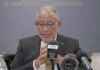
CDB’s acting deputy director of the Economics Department, Jason Cotton, told the bank’s annual news conference that, excluding Guyana, regional gross domestic product is forecasted to grow by 1.1 per cent.
He said Guyana is expected to expand by over 20 per cent, lifting regional growth to 6.2 per cent when included.
He told the news conference that among other commodity exporters, prospects remain mixed, with growth outcomes closely tied to commodity price trends and production dynamics.
Service-exporting economies are expected to record modest growth, largely driven by tourism and construction. Developments in global commodity markets will shape inflation dynamics in 2026.
Cotton said that, on the fiscal front, some countries will continue consolidating and strengthening their revenue administrations.
“However, pressures from post-disaster recovery, rising wage costs, and declining citizenship by investment revenues persist. In several cases, these pressures have led to deviations from medium-term debt reduction paths and require fiscal adjustment to realign with established debt targets and preserve sustainability.” Watch video
But he said that risk remains on the downside.
“Global uncertainty, geopolitical tensions both globally and within the Caribbean basin, and climate-related shocks continue to cloud the outlook. Fiscal risk also remains pronounced, particularly in highly indebted countries with limited buffers.”
Cotton said that at the same time, stronger-than-expected tourism outturns accelerated investment, progress on the renewable energy transition, and accelerated reforms to the business environment could improve medium-term prospects.”
The CDB official said that in the Caribbean’s recent history, one external shock has followed another, each one underscoring how exposed small open economies remain. He said this year, beyond the shocks themselves, uncertainty has become more deeply entrenched.
“This reality makes regional cooperation not just desirable, but essential. In a more uncertain and fragmented world, vulnerability is magnified when countries act alone, but together, we are more resilient.
“It is equally important to emphasise that we are not without agency,” Cotton said, noting that external conditions matter, but they do not fully determine outcomes.
“The policy choices we make, the institutions we build, and the societies we shape will continue to influence the region’s path,” he said, adding these points to several clear development imperatives.
“First, we must improve implementation. Good plans and secured financing mean little without delivery. Implementation must match ambition. Second, we must diversify. Over-reliance on single industries leaves us exposed. More competitive, private-sector-led economies are essential to lasting resilience.
“Third, we must build resilience by design, invest upfront in stronger infrastructure, strengthen disaster risk financing, and ensure our social systems can respond when shocks strike. Fourth, we must strengthen fiscal institutions and safeguard debt sustainability.”
Cotton said wider adoption of well-designed fiscal responsibility frameworks will further strengthen policy credibility, and that resilience is about people.
“Equip them with skills, expand decent work, and unlock their productive potential. That is the foundation of sustainable growth. Taken together, these initiatives underscore a simple but powerful point.
“Resilience is built through credible policy choices, through stronger institutions, disciplined execution, investment in our people, and through regional solidarity. If we rise to meet this moment, we will not only withstand shocks, we will shape a more stable, more inclusive, and more sustainable Caribbean.”
Earlier, the CDB official said that 2025 was a reminder of a familiar reality for the Caribbean as small, open economies remain highly exposed to external shocks.
He said what is more concerning in this moment is the persistence of uncertainty and the narrowing room for policy error.
He said last year was more challenging for the Caribbean region, as global conditions became less supportive and downside risk materialised.
He said excluding Guyana, regional growth decelerated to 0.6 per cent from 1.4 per cent in 2024, as several economies recorded weaker growth or contractions. In contrast, Guyana’s growth decelerated from the exceptionally high rates recorded in 2024, but remained robust, with the economy still expanding at a double-digit pace.
“As a result, when Guyana is included, regional growth rose to 4.7 per cent. Outcomes varied across other countries. Among commodity exporters, economic activity in Suriname accelerated, partly reflecting continued oil-related investment, while Trinidad and Tobago experienced muted growth. Service-exporting economies expanded more slowly as tourism momentum eased.
“Once again, climate shocks weighed heavily on performance. Hurricane Melissa struck Jamaica while it was still recovering from Hurricane Barry, pushing the economy into a second consecutive year of contraction.”
Cotton said there was, however, some relief on inflation. He said in line with global trends, price pressures eased across most economies, with regional inflation falling to an average of 3.4 per cent from its 2022 peak of 9.7 per cent. Labour market conditions also improved in several countries, with lower unemployment and higher participation, though disparities remain especially among youth and women.
On the fiscal side, consolidation gains achieved in the post-pandemic period stalled in several borrowing member countries.
Excluding Guyana, the regional primary surplus narrowed to 1.3 per cent of GDP, as expenditure growth outpaced revenue growth. Higher recurrent expenditure, climate-related shocks, temporary tax relief measures, and volatile non-tax inflows all contributed to the weakening.
Cotton said that in Guyana, a substantial expansion in capital spending led to a sizable primary deficit.
“Consequently, when Guyana is included, the regional primary surplus narrows to 0.2 per cent of GDP. While the regional central government debt ratio declined slightly to 46.6 per cent, underlying vulnerabilities persist.
“Debt levels remain elevated in several economies, with central government debt still above 60 per cent of GDP in nine countries. Notably, in a few cases, fiscal responsibility frameworks helped contain deterioration by enabling orderly adjustment to climate shocks through escape clauses,” Cotton said.
Download video – CDB Acting Deputy Director of Economics, Jason Cotton










 and then
  Tuesday said economic growth is expected to remain “modest” among the countries of the region this year)