













PORT OF SPAIN, Trinidad, CMC—The three-day Caribbean Poultry Association (CPA) seventh international technical symposium began on Tuesday, with delegates reminded of the “critical importance” of agriculture in the Caribbean.
“Agriculture has been a cornerstone of Caribbean economies for centuries, providing livelihoods for millions of people, nourishing communities, and shaping cultural identities,” said Joseph Cox, the Assistant Secretary-General, Economic Integration, Innovation and Development, at the Guyana-based Caribbean Community (CARICOM) Secretariats.
He told delegates that the sector faces many challenges, including climate change, land degradation, water scarcity, and market volatility, which threaten its long-term viability and resilience.
The three-day event is being held under the theme “Sustainability & Resilience in the Caribbean Poultry Sector,” Cox said that the agriculture sector has not been spared the negative impacts of the recent geopolitical conflicts. These conflicts have led to pervasive logistics challenges within the global trade for commodities, which have resulted in severe supply chain bottlenecks and delays.
He said the poultry industry will play a significant role in CARICOM’s vision of reducing the food import bill by 25 percent by 2025.
However, he said that the approach that must be pursued for the poultry industry focuses on promoting increased production and productivity through investment, digitization, and adaptation of new technologies. Watch video
“These investments must encourage interventions, which seek to amalgamate the efforts of the member states and the private sector. In this case, the CPA. There are existing and ongoing examples, such as the corn and soya production in Belize and Guyana and the offering of land for agricultural development in Suriname supported by an environment that will occasion the movement of agricultural workers throughout the region. “
Cox said that poultry is the highest-imported meat product for the region, averaging US$149 million. He said the seven-member Organisation of Eastern Caribbean States (OECS) as a bloc accounts for US$54.5 million of imports, with The Bahamas being the single largest importer, amounting to US$30.8 million.
Cox said that while Belize and Guyana are self-sufficient in poultry production, the “case of Jamaica is indicative, whereas as of 2022, some 75 percent of the hatching eggs were imported, with Jamaica Broilers being the only local broiler with a local incubator that produces some 40 percent of their fertile egg needs.
“This is compounded by the Highly Pathogenic Avian Influenza (HPAI) outbreak in the US, which has led to the severe challenges being faced by individual and contract farmers to source baby chicks for both their broiler and layer operations.”
Cox said that the Regional Chief Veterinary Officers are now developing the necessary response plan and working with stakeholders to ensure that we have a safe and steady supply of hatching eggs and day-one chicks, which are critical for the region’s food security.
“The CARICOM Secretariat, through its Agricultural Development Unit and CAHFSA, stands ready to continue to provide the necessary support to tackle this real and present danger to the poultry industry.
“We intend to advance the draft regional Bio-Security instruments (Draft Model legislation) to assist member states and other stakeholders in preventing, managing, and responding to any such future challenges.”
Cox said notwithstanding, the figures indicate the sector’s importance to the region and highlight the immense poultry sector investment opportunity.
“When the region can feed itself, it protects communities from exogenous shocks and supports the growth and expansion of other related industries such as the grains and the feed sector. Said another way, there are real opportunities for the region’s private sector through the poultry industry. Research indicates that there currently exists a US$150 million opportunity.”
Cox said that the poultry industry has provided a boost to economic growth and created employment opportunities across the agricultural value chain, particularly in the region’s rural communities.
“From small-scale farmers engaged in backyard poultry rearing to large-scale commercial operations involved in hatchery management, feed production, and meat processing, the poultry sector offers diverse avenues for income generation, livelihood improvement, and inclusive growth.”
But Cox told the delegates that one of the fundamental questions that continue to occupy the minds of policymakers across the region is how to increase the level of private investment while simultaneously improving Total Factor Productivity Growth (TFPG), thereby fostering sustainable economic growth over the medium term.
He said this requires even more focused attention on improving the business climate and for the state to adapt to its role of facilitator in the new paradigm.
“This necessitates that transaction costs are minimized and that the requisite transparency guarantees which are associated with an optimized public policy are provided. Therefore, across the region, we need to be mindful of a burgeoning bureaucracy and a costly regulatory environment that creates effective barriers to formal investments and is a disincentive to increased productivity and growth.”
Cox said creating a supportive policy environment is vital for the growth and sustainability of the Caribbean poultry industry.
He said that governments must always remain mindful of formulating policies that encourage sustainable practices, prioritize food safety and quality, and enhance market access for smallholder farmers.
Cox said by aligning policies with sustainable development, the region can foster investment, innovation, and collaboration, leading to positive socio-economic and environmental impacts.
“Indeed, it is the CARICOM Single Market and Economy (CSME), which was born out of the vision of our past leaders to create that enabling environment for Caribbean growth and development, which represents the overarching construct within which the Caribbean poultry sector now operates, governed by a set of regional policies and rules on human and animal health and trade that finds their basis in the Revised Treaty of Chaguaramas (RTC), which is the cornerstone of the regional integration movement.”
He said that the CSME, which allows for the free movement of goods, skills, labor, and services across the region, as a unified commercial and economic space, in its ultimate construct, is intended to assist in the achievement of Caribbean economic growth and development by promoting the more efficient use of the resources that are available throughout the Community.
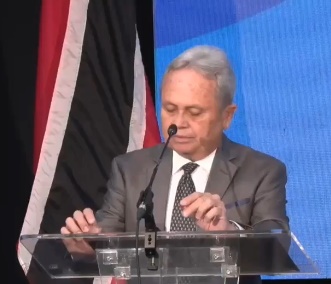
In his address, Cox said that the regional poultry industry must embrace innovation and technology to improve productivity, efficiency, and sustainability.
He said advances in genetics, nutrition, and disease management have transformed poultry production, resulting in higher yields and better health outcomes for their flocks.
“Precision agriculture, automation, and renewable energy can optimize resource use and reduce environmental impact. The poultry sector can unlock growth and competitiveness through innovation while minimizing ecological footprints.
“However, it is worth noting that more institutions need to support innovation in the region, such as early-stage financing mechanisms, incubators, and accelerators. From the perspective of public finance, the limitations of fiscal space and the almost peripheral approach to research and development and technical extension services have proved to be a limiting factor for innovation.”
In his address to the conference, Finance Minister Colm Imbert, who is also the Trinidad and Tobago acting Prime Minister, told the audience that poultry production serves as the “backbone” of food security, providing more than 80 percent of the high-quality protein consumed in diets of Trinidad and Tobago nationals. Watch video
“It supports thousands of livelihoods from farm workers to processors and stimulates related industries, including feed production, veteran services, and equipment supply,’ Imbert said, adding that chicken remains the top stable in terms of the diets of Trinidadians.
He said the poultry sector’s significance extends beyond economics, saying, “It is vital to our national identity and food sovereignty.
‘As such, the continued growth of the poultry industry is imperative, not only to meet the increasing demands for protein…but also to ensure that this growth is environmentally sustainable and economically viable”.
He said the poultry industry has “much potential” with the UN Food and Agriculture Organization (FAO) in addressing high food prices in the Caribbean. He noted that the industry’s annual gross income is estimated at more than US$500 million.
“It is the largest agro-processing enterprise,” Imbert said, noting that annual production is more than 200 thousand tons of meat and almost 30,000 metric tons of table eggs.
“Some Caribbean countries, especially Jamaica and Trinidad and Tobago, have domestic poultry industries that not only supply their local markets but also export to other regional markets.
“However, the Caribbean region’s producers face multiple challenges. That increases the cost of production, placing them at a price disadvantage to larger overseas competitors. Extra regional poultry imports, in particular, continue to threaten domestic production, especially in the importation of frozen poultry.”
Imbert said producers in Trinidad and Tobago, Jamaica, Barbados, Belize, and Guyana are particularly vulnerable to this threat of cheap imports, acknowledging that the poultry sector is a significant contributor to the economies of the CARICOM region.
“For example, in Trinidad and Tobago, the agricultural sector with poultry as its mainstay contributes significantly to our GDP (gross domestic product), and this sector in Trinidad and Tobago recorded expansion in the number of broilers produced in the first two quarters of fiscal 2023 when compared to the first two quarters in fiscal 2022”.
Imbert said this increase can be attributed to the fast food industry’s higher demand for chicken and the growing trend by grocery chains to offer pre-cooked and ready-to-eat chicken to their customers.
He said the sector also plays a crucial role in employment, “directly supporting tens of thousands of regional jobs.
“However, the sector faces considerable challenges. The threat of climate change looms large and manifests itself in rising temperatures…unpredictable weather patterns that affect feed and increase disease prevalence.”
Download video – Mr. Joseph Cox Assistant Secretary-General Economic Integration Innovation and Development – CARICOM
Download video – Colm Imbert Acting Prime Minister Trinidad and Tobago







 and then
  seventh international technical symposium)