




































NASSAU, Bahamas, CMC – The Bahamas government, on Wednesday, said that one of the immediate impacts of the ongoing conflict in the Middle East involving Iran, Israel, and the United States will be an increase in oil prices.
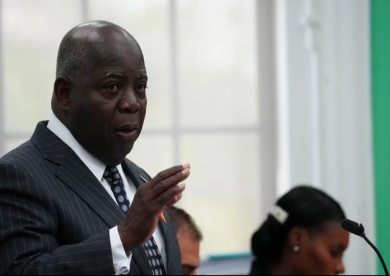
“Since we import nearly all of our fuel, any rise in global oil prices affects us directly. Higher fuel costs are inflationary. Inflation, in the absence of mitigation, would fall on consumers,” Prime Minister Phillip Davis said as he presented the mid-year budget communication for the fiscal year 2025/2026.
But he told legislators that thankfully, his administration had put in place measures “to protect us during times of volatility, which means the inflationary impact on consumer electricity bills will not be felt due to this conflict in the short and medium term”.
He told Parliament that in 2024, real gross domestic product (GDP) growth reached 3.4 per cent and that the International Monetary Fund (IMF) estimates the Bahamian economy will expand by 2.8 per cent in 2025, driven primarily by construction activity and continued strength in cruise tourism.
He said growth is expected to taper to 2.2 per cent in 2026, partly reflecting relatively stagnant stayover tourism. Prime Minister Davis said over the medium term, economic growth is projected to slow toward the economy’s assessed potential growth rate of 1.5 per cent.
He said over the past four years, The Bahamas has typically outperformed IMF growth projections and that in 2024, while the IMF anticipated a modest 1.9 per cent increase, The Bahamas achieved a 3.4 per cent growth rate.
He said the country has strengthened its position as a premier cruise destination through bold partnerships and strategic investments, and that these investments are not just figures on paper but represent confidence in The Bahamas, confidence in the people, and confidence in the future.
“Across our Family Island cruise destinations, we are witnessing unprecedented development. As major cruise lines invest in building luxury private island destinations throughout our archipelago, The Bahamas benefits alongside them. These developments drive economic activity, increase visitor spending, and expand opportunities island by island.”
He said both Carnival Cruise Line and Royal Caribbean International launched new projects here, further enhancing the tourism product.
“These projects are not isolated ventures. They are part of a broader national strategy to ensure that tourism remains the primary driver of our economic growth over the next three years. The contributions to GDP from cruise tourism continue to expand, strengthening government revenues and supporting infrastructure development throughout our islands.
“Most importantly, these investments create jobs. They lower unemployment. They empower Bahamians to earn a living, support their families, and build generational wealth. From construction and hospitality to transportation and small business services, the ripple effects are felt throughout our communities.
Davis said that the national unemployment rate declined to 9.3 per cent in the second quarter of 2025, down from 10.8 per cent in the first quarter, with youth unemployment falling to 20.3 per cent, which drove much of the improvement.
“Looking ahead, unemployment is expected to ease slightly to 9.1 per cent in 2026. In more recent years, unemployment averaged 14.1 per cent between 2017 and 2020, then moved to an average of 9.9 per cent in the four years following the 2021 election, supported by a broad recovery in services, particularly tourism, and steady growth in construction and retail.”
Prime Minister Davis said that on the price front, inflation remained contained with the most recent data through May 2025 showing a modest 0.4 per cent increase compared with the same period in 2024.
He said the largest price increases were recorded in furnishings and household equipment, clothing and footwear, and health services, while gasoline and diesel prices declined by 7.3 percent and 7.8 percent, respectively.
“Overall, The Bahamas continues to demonstrate steady economic progress, supported by strong tourism performance, improving labour market conditions, and contained inflation.”
Davis said that at the halfway point of the fiscal year, the government’s obligations, including arrears and unpaid invoices, totaled US$241.9 million.
He said this figure includes US$ 60.5 million in arrears, which are payments carried forward from prior fiscal years, and US$181.4 million in unpaid invoices from the current fiscal year, which are typically turned around within 90 days.
Davis said the primary driver of this increase is obligations to state-owned enterprises (SOEs), adding that when obligations to public corporations are excluded, the yearly increase in outstanding balances at end-December 2025 would have been approximately US$29 million.
“To put this into perspective, total commitments, including the SOEs, reached 6.3 per cent of the total expenditure budget in fiscal year 2025/26, compared with 3.4 per cent in fiscal year 2024/25, a period when most SOEs recorded zero unpaid invoices. Excluding the SOEs, however, commitments remain low, at just 3.7 per cent of the total expenditure budget in FY2025/26, up from 3.1 percent in fiscal year 2024/25.”
Prime Minister Davis said that the fiscal performance for the first six months of the 2025/2026 fiscal year showed that preliminary total revenue collections are estimated at US$1.5 billion, reflecting a US$66.6 million increase compared to the same period last year.
He said so far, revenue collections have accounted for 38.7 per cent of the annual budget target.
He said tax revenue collections increased by US$54.4 million to US$1.3 billion for the first six months of the fiscal year, representing 39.1 per cent of the budget target.
Value-added tax collections accounted for 54.9 per cent of tax revenues, totaling US$739.1 million at the half-year mark. This represented growth of US$76.1 million compared to the same period in the previous year and equated to 48.5 per cent of the annual budget target.
Prime Minister Davs said VAT has performed better across goods, services, and real estate. Vat on Realty saw a 50.3 per cent increase in this period over the prior fiscal year’s first six months period.
“We have also seen a notable increase in VAT collected from cruise lines and private destinations, with collections at end-2025 improving 164 percent compared to end-2024.”
Prime Minister Davis said the improved revenue performance recorded over the first six months of the current fiscal year is a clear reflection of the continued growth and resilience of the Bahamian economy.
“This performance aligns with broader economic indicators, particularly the strength of the tourism sector, which I noted earlier has reached record levels. Visitor arrivals are higher than ever before, and this expansion in tourism activity has translated into stronger revenue outcomes across several key tax categories. For instance, this tourism growth should be reflected in our departure tax collections.”
Davis said over the first six months of the fiscal year, departure tax revenues totaled US$160.9 million, representing a slight decline of 5.1 per cent when compared to the same period in the previous year due to outstanding cruise departure tax and sustainability levy payments, totaling approximately US$18.8 million that were owed to the government in December 2025.
“Once these payments are received and accounted for, the true improvement in departure tax performance will be accurately reflected in the government’s fiscal accounts,” he said, noting that a similar timing issue is evident within customs duty collections, particularly as they relate to the cruise industry.
“While overall customs revenues are affected by delayed cruise-related payments, several sub-categories within this tax group have performed strongly. We have recorded positive intakes for cruising permits, anchorage fees, and frequent visitor cards.
“Some have expressed the view that the cruising permit regime has weakened our maritime sector. However, despite these concerns, demand for access to Bahamian waters has remained strong. ”
Davis said in the non-tax revenue component, collections were mainly higher for fees and service charges, particularly for customs fees, which increased by US$11.6 million to US$41.8 million, and equated to 48.2 per cent of the budget target.
He said that for the first half of the fiscal year, preliminary aggregate expenditure totaled US$1.9 billion, an increase of US$41.3 million over the previous year.
“To date, total expenditure has represented 48.4 per cent of the annual budget target,” he told legislators.







 and then