




































Michael Babwar had always believed that stories were more than ink on paper—they were living things.
Every morning before the sun fully rose over the city, he would unlock the glass door of the Caribbean Times office, the faint smell of fresh print and yesterday’s headlines still lingering in the air. To most people, it was just a newspaper. To Michael, it was a heartbeat—steady, urgent, and necessary.
He didn’t start as a publisher. Years ago, he was just a young writer with a stubborn belief that the voices of Caribbean communities deserved to be heard—not filtered, not softened, not forgotten. He wrote about everything: neighborhood heroes, struggling businesses, cultural festivals, and the quiet strength of people building lives far from their islands.
At first, no one paid much attention.
But Michael kept writing.
He wrote late into the night, fueled by coffee and conviction. He chased stories others ignored. When larger outlets overlooked important issues, Michael made sure they had a front page. When people said, “It’s too small to matter,” he answered, “That’s exactly why it does.”
Eventually, the stories began to travel.
One article turned into a weekly column. The column turned into a publication. And that publication became the Caribbean Times—a voice that carried across neighborhoods, cities, and even oceans.
But success didn’t make things easier.
There were nights when the numbers didn’t add up, when printing costs rose, when advertisers hesitated. There were moments when Michael sat alone in his office, staring at a nearly empty page, wondering if he could keep it all going.
And every time, he remembered why he started.
Not for profit. Not for recognition.
For people.
For the grandmother whose story of migration inspired thousands. For the young artist who got their first feature and never looked back. For the community that finally saw itself reflected—not as a footnote, but as the headline.
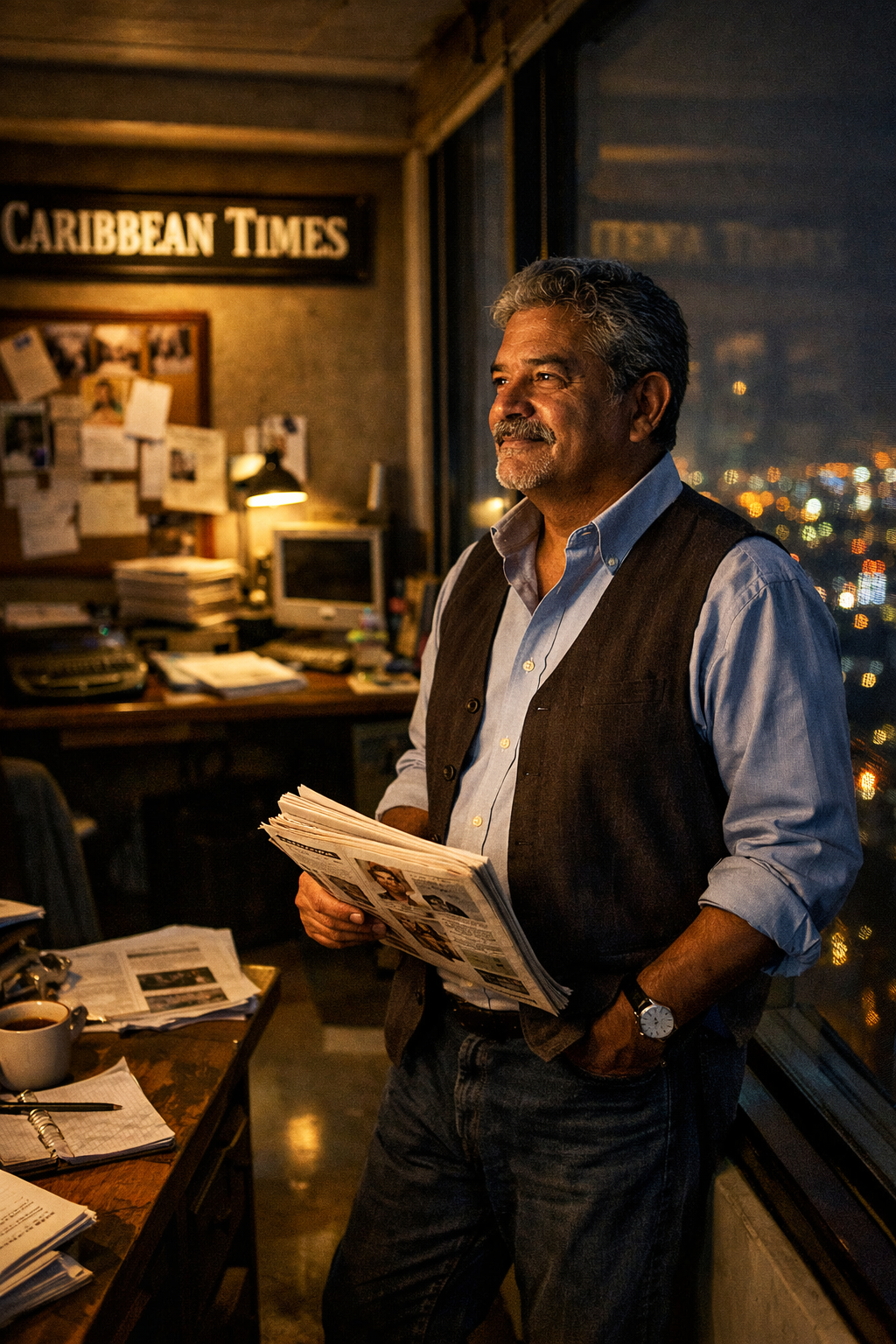
One evening, long after everyone else had gone home, Michael stood by the window overlooking the city. The lights flickered like constellations, each one a story waiting to be told.
He smiled.
Tomorrow’s issue wasn’t finished yet. There were still edits to make, headlines to sharpen, voices to amplify.
And that was exactly how he liked it.
Because as long as there were stories left untold, Michael Babwar knew his work wasn’t done.











 and then