

















MIAMI, CMC – Belize, Guyana, and Trinidad and Tobago have appealed to the United States for assistance as they outline challenges to their respective borders.
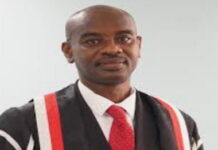
Addressing United States and hemispheric security leaders at the first-ever Americas Counter Cartel Conference, Belize National Defence Minister, Florencio Marin Jr, said the region can only keep pace with transnational crime if countries respond with the same level of coordination and urgency that criminal groups already wield.
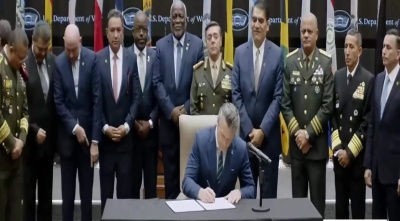
US Secretary of War Pete Hegseth hosted the inaugural conference at the US Southern Command, which comes ahead of President Donald Trump’s Shield of the Americas summit here on Saturday.
“I thank the leadership of the Department of War for bringing us together around a shared purpose, strengthening our collective response to cartel activity and transnational crime across the western hemisphere,” Marin told the conference.
“ For Belize, this is not abstract. As a small, but strategically located nation, bridging Central America and the Caribbean, we sit along key maritime and overland routes exploited by criminal networks. These networks traffic narcotics, weapons, and human beings.
“They undermine governance, distort economies, fuel corruption, and erode the safety and confidence of our citizens. Cartels and transnational criminal organizations do not respect our borders. They adapt quickly, leveraging technology, exploiting institutional gaps, and moving seamlessly across jurisdictions.”
Marin said that the response must therefore be equally adaptive, coordinated, and resolute. “Belize remains firmly committed to a comprehensive security strategy that combines strong border protection, maritime domain awareness, intelligence-led operations, and close interagency collaboration.
“We are investing in the professionalization of our defense and security forces, strengthening our legal framework, and enhancing our operations with regional and international partners. But no nation, in particular, Belize, can confront this threat alone,” he said.
Guyana said it welcomes the adoption of the Joint Security Declaration and is looking forward to joining the coalition to combat narco-terrorism.
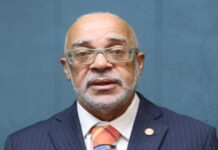
Prime Minister Mark Phillips, a retired Brigadier and former head of the Guyana Defence Force (GDF), told the conference that his country “remains committed to being a reliable and active partner in advancing the security and stability of the Western Hemisphere”.
Phillips said the coalition would be particularly beneficial to Guyana at a time when transnational activities of cartels, gangs, and other criminal actors threaten regional peace and security. He said those networks undermine the rule of law, weaken institutions, and threaten democracy, as well as the safety and economic well-being of citizens.
“For countries like Guyana, located along important maritime and regional transit corridors, addressing narco-trafficking and narco-terrorism requires strong cooperation among our nations. These threats demand coordinated intelligence sharing, enhanced operational cooperation, and strengthened defense capabilities across the hemisphere,” he said.
Phillip said Georgetown and Washington share a strong and expanding strategic partnership built on mutual trust and robust defence and security cooperation, adding that through capacity building, joint exercises, and policy and technical engagements, “our countries have worked closely together to combat narco-trafficking and other forms of transnational crime”.
He said that as the region continues to grow economically and strategically, they must work together to protect critical infrastructure, strengthen national institutions, enhance their resilience to evolving security threats, and respect the sovereignty and territorial integrity of every state.
“Through deeper cooperation and partnership, we can ensure that our hemisphere remains safe, secure, and a zone of peace,” he said.
Trinidad and Tobago’s Defence Minister, Wayne Sturge, in calling on the US to provide his country with “assets,” said that while his country supports the US, it also needs assistance.
“For many years, Trinidad and Tobago’s geopolitical position was a blessing as a gateway connecting South America to the Caribbean and beyond. But that blessing has become a burden as in recent times we found ourselves at the mercy of powerful drug cartels and criminal networks engaged in narco-trafficking, firearms trafficking, and human trafficking.”
Sturge said that Trinidad and Tobago stood with the US in confronting cartels and transnational criminal organisations in “our neck of the woods”.
“We are not observers in this fight. We are on the frontline with you,” he said, recounting how law enforcement officers have died in the fight, including one sailor during the interception of a semi-submersible carrying several tons of cocaine.
“We have lost thousands of citizens over the last two decades to violent crime, fuelled mainly by the actions of the new narco-terror networks. But our economic fortunes have changed, subjecting us to severe structural constraints which hinder us from delivering the appropriate level of border security needed.”
Sturge said that Trinidad and Tobago were once classified as a high-income country. Still, this GDP-based classification was now strategically misleading and limited access to critical security assistance, equipment, and resources.
“This at a time when our borders are critically exposed, leaving us at a critical disadvantage as we face off with sophisticated and well-financed narco-traffickers who move their goods northwards into your neighbourhoods and onto your streets, into your homes, and bring in destruction to your youth,” he said.
“If we are to deliver effectively as the security anchor in the Southern Caribbean, we require assets that would equip us with the capability to disrupt the cartels in the transshipment corridors and to protect our shared economic interests in the energy sector.
“Every shipment intercepted in our waters would never reach your streets. Again, permit me to underscore our commitment that we stand ready, our personnel are highly trained, and our doctrine aligns with yours.
“We require assets in the interim that would enhance our maritime domain awareness as well as enable us to carry out targeted reinforcement that would serve both our interests and would deliver immediate hemispheric benefits,” Sturge said, adding that the government of Trinidad and Tobago is ready to shoulder its responsibility, “and once proportionally equipped to the expectations placed upon us, we will deliver results”.
US Secretary of War Hegseth opened the conference by highlighting the Monroe Doctrine of 1823, which declared the Americas off-limits to European colonisation while the US would avoid entanglement in European conflicts.
“We want unfettered access to key terrain and trade so that our nations can industrialise. And we want to prevent external powers from threatening our peace and independence in our shared neighbourhood.”






 and then