



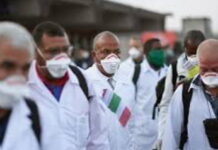










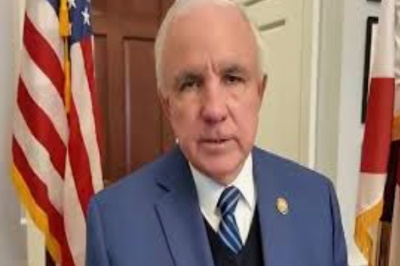
WASHINGTON, CMC – A United States legislator, who last month had been critical of Jamaica over its statement on Cuba, is now supportive of the Caribbean country’s position on discontinuing the current arrangement regarding the deployment of Cuban medical professionals in the public health sector.
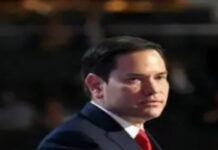
Congressman Carlos Gimenez had accused Jamaica of covering up for the Cuban dictatorship. Gimenez, after Prime Minister Andrew Holness had highlighted the economic hardship, energy shortages, and growing humanitarian challenges being experienced in Cuba in his speech at the opening Caribbean Community (CARICOM) summit in St. Kitts and Nevis last week.
On Thursday, Kingston announced that it would discontinue the current arrangement for the Cuban government’s deployment of medical professionals in the public health sector.
In a media release, the government said this decision comes as both Governments were unable to agree on the terms and conditions of a new technical cooperation arrangement, following the expiration of the previous agreement in February 2023.
“In the interest of continuity of the valuable service provided by the Cuban medical professionals present in the country, and for their personal certainty and well-being, the Government of Jamaica has indicated its willingness for the Ministry of Health and Wellness to engage these medical professionals on an individual basis, in keeping with local labour laws. This arrangement would last for the remainder of their scheduled tenure in Jamaica under the programme,” the ministry said.
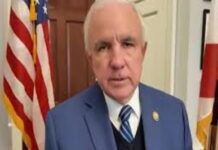
Gimenez, who is a member of the House Committees on Armed Services and Homeland Security, in welcoming the Jamaican government’s position, said, “In the US Congress, we thank the people of Jamaica for ending this pathetic, criminal human trafficking operation with the dictatorship in Cuba.
“Doctors were human trafficked, their wages garnished and subjected to inhumane conditions amounting to modern-day slavery,” said Gimenez, the Congressman serving Florida’s 28th Congressional District.
Last month, the United States Embassy in Barbados said the Cuban regime’s “medical missions” programme, which has benefitted several Caribbean countries, relies on coercion and abuse.
“Cuban medical workers face withheld wages, confiscated passports, forced family separation and exile, restriction of movement through curfews and surveillance, intimidation and threats, and even pressure to falsify medical records and fabricate procedures. Many also endure excessive work hours and unsafe conditions,” the Embassy said.
Washington has also stepped up its attack on the Cuban health brigade programme, saying that the regime in Havana is profiting off the forced labour of medical personnel and that “renting out Cuban medical professionals at exorbitant prices and keeping the profit for regime elites is not a humanitarian gift.
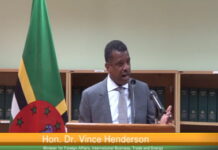
On Monday, the Dominican government said it would enter into personal contracts with Cuban medical professionals as it sought to modify its long-standing arrangement with Havana amid efforts by the United States to get Caribbean countries to stop supporting the Cuban medical brigade programme.
Prime Minister Roosevelt Skerrit told reporters that the main change will be that the government will sign contracts directly with the professionals.
“That’s the main change. So we will sign contracts with individual doctors and nurses, and so that decision will have been taken as we intimated some time ago,” Skerrit said, noting that he had expressed that position “some time ago in my public statements as well”.



 and then