


































KINGSTOWN, ST. Vincent, CMC – The St. Vincent and the Grenadines government, Tuesday, told citizens to be prepared for possible increased prices as a result of the ongoing United States-Israel war on Iran.
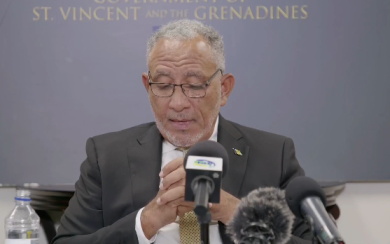
Prime Minister Dr. Godwin Friday told a news conference that the impact of the war, which began last Saturday, could have “serious implications” for his Caribbean Community (CARICOM) country.
“The bombs may not fall here, but they have serious implications for us and for other countries around the region, one of which, of course, immediately, you have conflict in the Middle East, you have the concern about energy and fuel cost shocks that will affect us,” he told reporters.
Last Saturday, Israel and the United States launched a series of military attacks against Iran targeting the country’s leadership, security forces, nuclear programme, and missile sites.
Washington and Tel Aviv say they intend to induce regime change in Iran and to address concerns regarding its nuclear programme. The strikes are reported to have caused both military and civilian casualties in Iran.
In response, Iran has launched a series of counter-strikes against Israel, US military bases in the region, and military and civilian locations in Arab states that house US forces. There have been several casualties.
Friday told reporters that St. Vincent and the Grenadines faces “the high likelihood of experiencing a severe energy and fuel-cost shock over the next 12 months” and that it “all depends on how this conflict plays out, whether it’s terminated fairly quickly…
“But we anticipate that there is going to be a very high risk of us experiencing increasing fuel costs,” he said, adding that higher fuel costs have “so many implications” and “the effects throughout the economy, we know what those possibilities can be”.
Friday, who is also the Minister of Finance, noted that the island is highly dependent on tourism and that the sector is the largest contributor of foreign exchange to the local economy.
“Tourism creates jobs, and it’s one of the fastest-growing sectors of our economy. But when you have conflict in areas of the world that affect fuel costs and so forth, it affects connectivity, increases costs, and all of that is factored into people’s travel and so forth.
“And so we anticipate that there’s a risk of a downturn, especially in the long-haul arrivals and also occupancy rates would be affected,” Prime Minister Friday said, adding that his government has to be very alert, “and we are studying the impact of the war and what can be done to mitigate it.
“It’s better to prepare. Even though we can’t control the outcome, we can’t control its effects, but we can control how we respond. And so that is, to some extent, within our power to do, and we are working hard to do.”
He said St. Vincent and the Grenadines also faces the risk of “imported inflation and subsequent cost of living pressure, which we have experienced all too keenly coming out of the COVID crisis.
“And so we are very familiar with them. We’re still coping, reacting or responding to them now,” he said, noting that the war in the evolving Middle East “is something that is going to create serious problems for us, potentially” because many of the things consumed in St. Vincent and the Grenadines are imported.
“And when the cost goes up in the countries where they are being made, and the shipping situation creates greater concerns that are imported here, and the price, it’s essentially imported inflation.”
Friday said that economists will have more technical terms to describe the situation than he would.
“So, we have to monitor this very carefully for the early warning indicators to see to what extent you look at freight and insurance quotes and so forth, supermarket tracking goods to see to what extent they are moving.
“And we have to, as a government, be alert to this, because we, as I said earlier, just months ago, we implemented measures intended to address the cost of living crisis that we’ve been experiencing by VAT-free shopping day, the salary, bonuses, the various measures that we did to assist persons, vulnerable persons and social assistance and so forth. That’s the intention,” said Friday.
“And so here now we have to plan. We have to anticipate some of the fallouts of this. There may also be disruptions in shipping chains. We know that term again: supply chain disruption. We learn that during COVID. So it’s something that we are alert to, and we have to be aware that scarcity may be a problem,” he said.
“There are certain things we may not be able to get, especially in building and construction, oil and supplies, and so forth. These are things that, as a responsible government, you know the potential fallout from this conflict,” the prime minister said.
“As I say, even though we are not directly involved in it, the whole world is connected. Now. It’s so much a trade that we have to ensure that we’re alert to the possibilities, and that we take measures to mitigate them,” Friday told reporters.









 and then