
















ROSEAU, Dominica, CMC – The Dominica Solid Waste Management Corporation (DSWMC) says it has completed its second waste characterization study in 21 years with the results intended to inform the evaluation of the island’s recycling potential, assessment of organic waste management options, and policy and decision making.
Dominica and Grenada are the two member countries of the Organisation of Eastern Caribbean States (OECS) demonstrating the OECS Model for Plastic Waste Separation, Collection, and Treatment, under the European Union/AFD-funded Recycle OECS project.
Established in 1996 and operationalized a year later, the DSWMC conducted its first study in 2002. The initial assessment informed the construction of the landfill site at Fond Cole on the capital’s outskirts, ahead of the closure of the existing dumpsites at Roseau and Portsmouth, north of here.
Since then, this is the first waste classification study undertaken.
According to DSWMC general manager Florian Mitchel, waste characterization studies play a crucial role in assessing the recoverable materials in the waste stream and establishing baseline data.
“They provide the basis for many operational decisions. They generate an array of data sets that guide everything from what operational modalities to inventory and even what cost structures are feasible for waste management services to households.”
He said incorporating plastic recycling as a waste reduction strategy in the OECS will “create notable changes in the waste management value chain, as people, communities and businesses willingly and consistently separate their waste for collection.
“These findings are valuable to track and analyze current and future trends,” he added.
The study team was led by Dale Cozier, a Waste Management specialist from the Seureca/Unite Caribbean Consortium, contracted by the OECS to provide technical support for designing the Recycling Model and its demonstration in the two member states.
The Recycle OECS Model for the demonstration phase has been designed and validated by Waste Management Authorities (WMA) across the OECS. It will be enhanced through lessons learned from the demonstrations, emerging opportunities, and other new pertinent information as it becomes available.
Technical and economic pillars are among the five core pillars of the model, and Cozier explained that the study enables the evaluation of the technical and economic feasibility of implementing recovery and recycling initiatives.
The other pillars buttressing the model focus on financing, regulation, social intervention, and communication. The first pillar considers options for sustainable funding for long-term operation and viability of the model, while the second addresses governance structures such as policy and regulation and management arrangements.
Cozier said the composition of municipal solid waste highlights variations by community or region, which are influenced by waste generation practices by households and businesses. , “The last pillar is about people, what and how they dispose of waste. The analysis guides the WMA on how to approach public education and capacity building internally and at various levels of the value chain to empower all waste generators to separate their waste at the source, recycle and ultimately extend the life of the landfill, and reduce plastic pollution.”
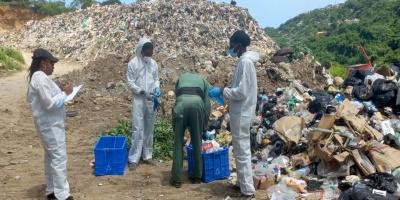
The sampling plan used for the study involved collecting and manually sorting multiple waste samples during the period from July 22-28 this year at the Fond Cole Landfill. During this period, approximately 3,900 lbs of waste was sorted.






 and then
  says it has completed its second waste)